
The short answer
Swant Graber sets a final trade offer after an in-person inspection and drive, based on condition, mileage, features and options, and history. You can start online and get a valuation first; the final number can differ from an online estimate because the appraisal considers the actual vehicle and the current market.
In Wisconsin, when the trade-in and the purchase are one transaction, sales tax is figured on the price after the trade-in allowance (DOR Publication 202). Selling your old vehicle separately and using the cash as a down payment doesn't get that treatment.
What goes into the offer
| Factor | What we look at |
|---|---|
| Condition | Interior, exterior, tires, mechanical condition and overall wear |
| Mileage | An important factor in current market value |
| Features and options | Trim, packages, technology and equipment |
| History and driving | Vehicle history and how it drives in the final inspection |
The Wisconsin sales tax math
Publication 202's example: a $20,000 vehicle with a $12,400 trade-in allowance is taxed on $7,600, even if the dealer also pays off a $10,000 loan on the trade; the payoff doesn't reduce the allowance for tax purposes. If the trade-in is worth more than the vehicle you buy, the taxable amount is zero.
Trade, payoff and amount financed
A rough worksheet to compare proposals on the same terms. Wisconsin generally taxes the price after the trade-in allowance; confirm your exact tax with your sales consultant or the Wisconsin DOR. Not a quote or a credit offer.
Why online estimates differ
Our FAQ puts it plainly: an online estimate starts with what you entered into a pricing tool; an appraisal considers the actual vehicle, its condition, history, equipment and the current market. Ask what affected the offer.
If you still owe on it
Bring your lender and payoff information. The payoff is weighed against the appraisal; if you owe more than the vehicle is worth, the difference (negative equity) has to be paid or financed. Ask for a written breakdown. More: trading in a car you still owe on.
What to bring
Trade-in documents
4 itemsYour ticks are saved only in this browser. Print or screenshot the list to bring it along.
Short answer
Bring all keys and remotes, the title or your lender and payoff information, service records, and anything that adds value (winter tires, accessories).
Tell us about known issues up front. The appraisal looks at condition, miles, equipment, history and the current market for similar vehicles.
What to bring
Checklist
6 itemsYour ticks are saved only in this browser. Print or screenshot the list to bring it along.
How we appraise
From our Our Story page: a guidebook number is only a starting point. The sales desk appraises the vehicle you bring in, considering condition, miles, equipment, history and what similar vehicles are doing in this market.
Start online
Use value your trade or sell your car to start. You can sell outright without buying from us.
Still owe on it?
See trading a vehicle with a loan.
The short answer
For a smooth trade in Wisconsin, bring the title (or your lender's name and a 10-day payoff), every key and fob, your registration, service records and the owner's manual, and clear out personal items and garage-door codes.
Wisconsin generally taxes the new vehicle's price after the trade-in allowance, so a trade can lower your sales tax as well as the amount financed (Wis. Admin. Code Tax 11.83).
The checklist
Trade-in checklist
10 itemsYour ticks are saved only in this browser. Print or screenshot the list to bring it along.
What moves an appraisal
| Helps | Hurts |
|---|---|
| Records showing regular maintenance | Warning lights, leaks, check-engine codes |
| Both keys | Missing keys or fobs |
| Clean, odor-free interior | Smoke or pet odor, heavy wear |
| Matching tires with tread | Mismatched or worn-out tires |
Selling without buying?
Our Sell Us Your Car page says you can sell us your vehicle without buying one. See selling your truck to a dealer in Wisconsin.
Sources: https://www.wisconsindot.gov/Pages/dmv/vehicles/sll-jnk-vhcl/sellyourvehicle.asp · https://www.wisconsindot.gov/Pages/dmv/vehicles/sll-jnk-vhcl/sellyourvehicle.asp
More questions
Can I sell my car to Swant Graber without buying one?
Yes. You can start an appraisal whether you're selling outright or trading.
Do I need the title to trade in a vehicle that's not paid off?
No. Bring your lender's name and account information and a payoff amount; the payoff is handled as part of the deal.
Does a trade-in reduce sales tax in Wisconsin?
Generally yes: tax is figured on the price after the trade-in allowance (Tax 11.83).
Do my plates go with the car?
Check WisDOT's rules for your vehicle type before the sale.
Why trade-in?
Trading in your current vehicle towards another can partially offset the cost of the new vehicle. The trade-in's net value goes towards the purchase or lease of a new car. Conditions of a trade-in vary depending on who owns the vehicle. If you own the vehicle, trading-in means that you're selling the car to the dealer for some determined price. As a result, the price of the new car goes down, only. If you are leasing a vehicle and do not own it, trading-in means that the seller of the new car agrees to pay the outstanding costs associated with the lease. Depending on the financing of the new vehicle and the outstanding balance on the old one, trading-in can either raise or lower the new car's price.
Why is it beneficial to trade-in?
When you trade-in you don't have to worry about selling the vehicle yourself or any of the associated costs (advertising, showing the car, etc). A dealer may offer a price you could not get yourself as an incentive to purchase a new vehicle. If the trade-in has known problems that could plague you later (when the buyer returns complaining), selling the car to the dealer eliminates the bother. Trading-in a lease car may relieve you of, in the long run, monthly costs you cannot afford. Sometimes people trade in lease vehicles because of poor gas mileage or lack of practicality.
Why decide against trading-in?
If you think you can get a better price selling privately, and it's worth the time, money and effort, do not sell to the dealer. Some cars are of special interest and dealers will not always recognize those interests.
What happens to a trade-in?
Some are kept by the dealer and resold as used cars. Many are sent to auction and purchased by other dealers for resale. Dealers know that auction prices often will not match the sum credited toward a new vehicle, but they absorb the losses as sales incentives.
How much can I expect to get?
Check used car values in guides issued by organizations such as Edmunds.com or the National Automobile Dealers Association (NADA). Often both trade-in and private sale values are listed. Factors such as mileage, overall condition, damage and known mechanical problems heavily influence the trade-in value.
Questions
How do I find out my trade-in value near Barron?
Start an online valuation with Swant Graber, then bring the vehicle in for a final inspection and drive. The final offer comes after that inspection.
Does a trade-in lower sales tax in Wisconsin?
Yes, when the trade and purchase are one transaction: tax applies to the price after the trade-in allowance (Wisconsin DOR Publication 202).
Why is the dealer's offer different from the online number?
The online number comes from what you entered; the appraisal reflects the actual vehicle's condition, history, equipment and the current market.
Next steps at Swant Graber
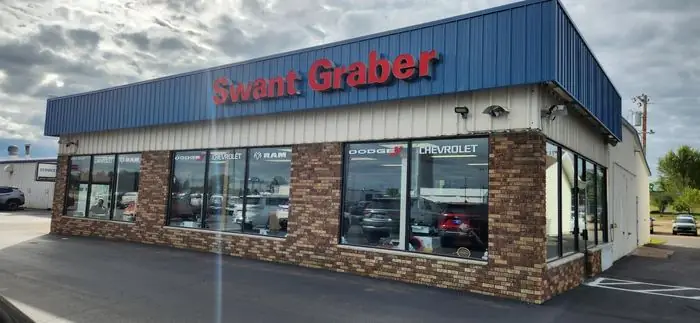
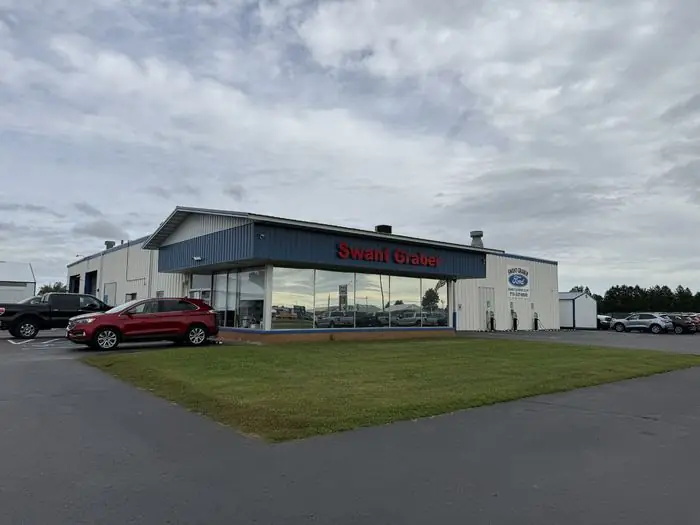
Swant Graber Motors (Chevrolet, Ram, Dodge): 1690 E Division Ave, Barron, WI 54812, 715-537-5657. Swant Graber Ford: 1697 E Division Ave, 715-537-9500. Search new or used inventory, or see shop near you for model-by-model answers.